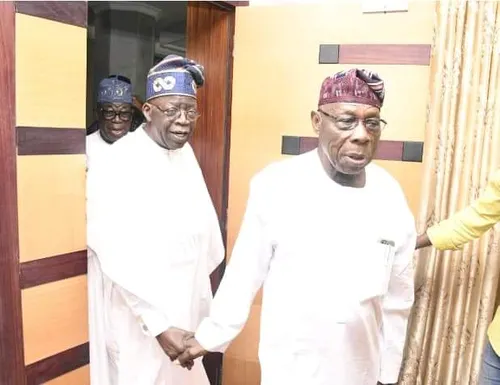
Obasanjo vs Tinubu: Former President Slams APC Over ‘Pampering’ Terrorists, Sparks Nationwide Debate
Early this morning, Twitter was ablaze as former President Olusegun Obasanjo unleashed a fiery tirade against the current APC administration. He didn’t just criticize – he accused the Tinubu government of literally pampering terrorists and turning deadly attacks into a twisted “religious competition.” The post went viral faster than a Lagos traffic jam, and Nigerians could not stop talking about it.
Obasanjo’s New Attack on the Tinubu Administration
In a series of posts, the ex‑president reminded the nation that when he was in office, the security agencies could track any criminal – but they had to move on the ground, foot by foot. “Now we have drones that can locate a suspect in clicks,” he wrote, “yet the Tinubu administration still sits down to negotiate with the very people who are killing our people.”
Obasanjo went further, declaring that the government’s willingness to talk to terrorists is a clear sign of failure – a signal that the state can no longer protect its citizens. He added that Nigeria, as a member of the international community, should not shy away from seeking help abroad if it cannot handle the menace alone.
Remember 2004: The Plateau Emergency
The former head of state also dusted off a memory from his own tenure – the 2004 State of Emergency in Plateau State. Back then, a brutal ethnic‑religious conflict (2001‑2004) claimed between 2,000 and 3,000 lives, a tragedy Human Rights Watch labelled a “near‑mutual genocide.”
Obasanjo explained that Governor Joshua Dariye had lost control, prompting him to declare emergency rule and appoint retired Major General Chris Alli as the administrator. Soldiers were given sweeping powers – they could detain without warrant, conduct searches, and take extreme measures to restore peace. Within six months, the violence subsided, though the legality of that emergency still sparks debate today.
Nationwide Reactions: Support, Skepticism, and the Politics of Security
Unsurprisingly, the reaction was split. Many Nigerians rallied behind Obasanjo, praising his “empathetic leadership” and arguing that his decisive actions in 2004 prevented a wider disaster. “When he was president, terrorists never had a field day,” one netizen posted, echoing a sentiment that resonated across the country.
On the other side, a chorus of patriotic voices accused Obasanjo of “demarketing” the nation for political mileage. They reminded the public that insecurity also plagued his administration, pointing to the Plateau emergency as proof that he, too, struggled to keep the peace. “He can’t claim to have solved everything when the same kind of crisis happened under his watch,” a commentator wrote.
What’s Next? Security, Diplomacy and the Role of the International Community
The debate has reignited a larger conversation about how Nigeria should tackle terrorism. Should the government continue negotiations, or should it adopt a more hard‑line approach like the one Obasanjo championed in 2004? And how much should we lean on foreign assistance – drones, intelligence sharing, or even peace‑keeping forces?
One thing is clear: the public is no longer willing to sit quietly while attacks continue. As the Tinubu administration faces mounting pressure, civil society groups such as @CitizenMonitors are urging Nigerians to stay vigilant, especially with the upcoming elections. “Observe the results in real time, no glitches,” they posted, linking to a monitoring portal.
Whether you stand with Obasanjo’s tough‑talk or defend the Tinubu government’s diplomatic route, the conversation is heating up. The question now is not just who is right, but how quickly our leaders can turn talk into tangible safety for every Nigerian on the streets of Lagos, the farms of Plateau, and the markets of Kano.
Share your thoughts, tag a friend, and keep the dialogue alive – because in a nation as diverse and resilient as ours, every voice matters.